
Mais vendido
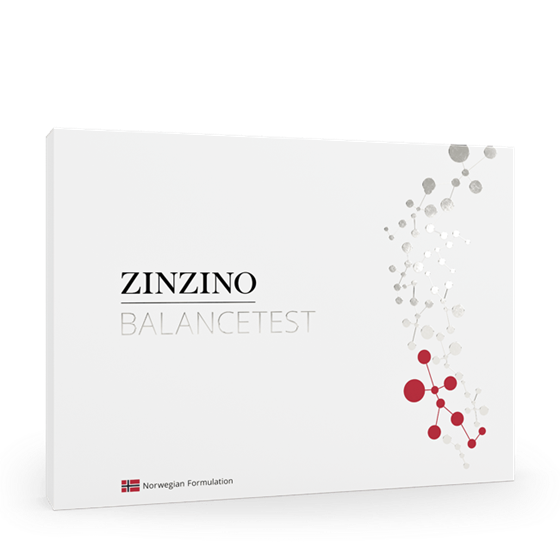
BalanceTest
Dried blood test for fatty acid analysis
Compra única
€ 189
5 créditos
Preço de venda
€ 189
ComprarVisão geral do produto
Zinzino’s BalanceTest is an easy test for analyzing the fatty acids found in capillary blood obtained from a fingertip using the Dried Blood Spot (DBS) technique. Reveal your unique fatty acid profile and learn more about your key Ómega-6:3 ratio based on laboratory analysis of 11 fatty acid levels in your blood, reported across six different fatty acid-related markers. All it requires is a few drops of blood from the fingertip on a filter paper and it takes less than a minute to complete.
VITAS Analytical Services1 in Norway will anonymously analyze the percentage content of 11 fatty acids, which together represent approximately 98% of the fatty acids in the blood. Due to the life span of blood cells (up to 120 days), the values provide insights into your longer-term diet. The results are then displayed, after about 10-20 days, on the zinzinotest.com website.
Principais benefícios
- Easy-to-use dried blood spot test
- Mede 11 ácidos gordos no sangue
- Provides data about your Ómega-6:3 ratio
Mais informações
What we measure
The test analyzes 11 fatty acids, including saturated, monounsaturated (Ómega-9) and polyunsaturated (Ómega-6 and Ómega-3) fatty acids. Os valores individuais de ácidos gordos são mostrados na tabela e expressos como percentagens dos ácidos gordos totais medidos. For comparison in the table, a reference range based on analyzed sample data is presented as Reference Value. São medidos os seguintes ácidos gordos:
Ácido palmítico, C16:0, saturated fat
Ácido esteárico, C18:0, saturated fat
Ácido oleico, C18:1, Ómega-9
Linoleico acid, C18:2, Ómega-6
Ácido alfa-linolénico, C18:3, Ómega-3
Ácido gama-linolénico, C18:3, Ómega-6
Ácido dihomogamalinoleico, C20:3, Ómega-6
Ácido araquidónico (AA), C20:4, Ómega-6
Ácido eicopentaenóico (EPA), C20:5, Ómega-3
Ácido docospentaenóico (DPA), C22:5, Ómega-3
Ácido docosahexaenoico (DHA), C22:6, Ómega-3
This is how your results are calculated
11 fatty acids are analyzed and the total sum of their amounts is considered 100%. Para os seguintes 6 valores, utilizamos 7 dos ácidos gordos. A quantidade analisada de cada um dos ácidos gordos 7 é calculada como uma percentagem da 100%.
1. Ómega-3 Ácido eicopentaenóico (EPA)
2. Ómega-3 Ácido docosahexaenoico (DHA)
3. Ómega-3 Ácido docospentaenóico (DPA)
4. Ómega-6 Ácido araquidónico (AA)
5. Ómega-6 Ácido dihomo-gama-linolénico (DGLA)
6. Gordura saturada, Ácido palmítico (PA)
7. Saturated fat, Ácido esteárico (SA)
Fatty acid score
First, the following 3 fatty acid markers are calculated:
1. The value for the Ómega-6 ratio is calculated as follows: (DGLA + AA) × 100 / (DGLA + AA + EPA + DPA + DHA)
2. The value for the Ómega-3 level is the sum of EPA + DHA
3. The Ómega-6:3 ratio is calculated as Ómega-6 (AA) / Ómega-3 (EPA)
Each indicator value is given the same weight in a second calculation and assigned a value between 0 and 100, which is then divided by 3 to calculate the Fatty acid score. The Fatty acid score is intended to be above 90. This does not provide information about the person’s health status, only the calculated fatty acid score based on the fatty acid markers included in the test.
Note: EPA and DHA values have a high impact on the calculations. If EPA and DHA percentages are low, very low or even zero fatty acid scores are not uncommon.
Ómega-3 IndexWB**
The Ómega-3WB Index is the summary of the percentage values for the two marine Ómega-3 fatty acids EPA and DHA in the analyzed blood sample. The reference level is at least 8%, while higher values such as 10% may also be shown in the report. Ómega-3 fatty acids are important components of cell membranes. EPA is found in blood, muscles and tissues, while DHA is found in the brain, sperm and eyes.
** Measures fatty acids in whole blood (WB = whole blood).
Ómega-6:3 ratio
The Ómega-6:3 ratio is calculated by dividing the percent value of AA by the percent value of EPA (AA / EPA), which is then expressed as a ratio, for example 3:1. If this ratio is above 3:1, a change in diet may be considered. A low Ómega-6:3 ratio is an indicator of fatty acid balance in the analyzed sample.
Fatty acid fluidity ratio
Fluidity is calculated by dividing the percent value of the two saturated fats by the percent value of the two Omega-3s. The Fatty acid fluidity ratio is thus defined as (PA + SA) / (EPA + DHA), and the result is expressed as a ratio, for example 3:1. If the Fatty acid fluidity ratio is below 4:1, it indicates a lower relative level of saturated fatty acids compared with EPA and DHA in the analyzed sample. The more saturated the fats are in a membrane, the more rigid the membrane. Conversely, the more polyunsaturated the fats are in a membrane, the more fluid the membrane. Cell membrane composition and structural architecture are important for normal cell membrane properties. On the one hand, the membrane needs to be rigid enough to provide cellular structure. On the other hand, the membrane needs to be fluid enough to allow normal membrane function.
Cognitive fatty acid index
This is calculated by dividing the percent value of AA by the sum of the percent values of EPA and DHA, i.e. the Cognitive fatty acid index = AA / (EPA + DHA). The result is expressed as a ratio, for example 1:1. The value should be below 1:1 for a balanced relationship between selected Ómega-6 and Ómega-3 fatty acids in the analyzed sample. The Cognitive fatty acid index provides information about selected fatty acids and does not assess cognitive function, mental health, learning, memory, or mood.
Ómega-6 (AA) level
The Ómega-6 (AA) level shows the measured value of the Ómega-6 fatty acid (AA) as a percentage of the total fatty acids measured. Average values are in the range of 6,5 to 9,5%. Ácido araquidónico (AA) is an important Ómega-6 fatty acid in the body. É o ponto de partida para a produção de hormonas tecidulares locais desencadeadas pela Ómega-6, tais como prostaglandinas, tromboxanos e leucotrienos, todos com várias funções. Overall, these compounds are involved in normal physiological signaling processes in the body.
Kit de teste certificado
The Zinzino Dried Blood Spot Test complies with the requirements of Regulation (EU) 2017/746 on in vitro diagnostic medical devices (IVDR) and is manufactured under a quality management system certified to ISO 13485. Compliance with applicable regulatory requirements allows the test kit to bear the CE mark.
Laboratório
O seu teste é analisado por um laboratório independente e com certificação GMP. O facto de a Vitas ter certificação GMP significa que segue as boas-práticas de fabrico. É um laboratório contratado para análise química, com 25 anos de experiência, fornecendo análise cromatográfica de alta qualidade baseada em conhecimento e tecnologia de ponta. Incluído na análise ao sangue está uma BalanceTest ID que só pode ser vista por si. Nem o laboratório, nem a Zinzino sabe quem submeteu o teste. Em zinzinotest.com, os seus resultados serão apresentados quando introduzir a sua BalanceTest ID. If you have completed the questionnaire, you will have access to your complete report. If you have not completed the questionnaire, you will only see your Fatty acid score.
Vitas - Quem somos Certificado Vitas - Declaração de Independência Certificado Vitas - Declaração de destruição de amostras
Como utilizar
Testar
1. Zinzino Test é um produto de diagnóstico in vitro para recolher amostras de sangue pessoais em casa.
- Primeiro, lave as mãos com sabão, enxague bem com água quente e seque-as.
2. Retire o cartão de amostra do envelope de papel. Guarde o envelope para utilizar mais adiante. Arranque a parte que diz SAVE no cartão de amostra e tire uma fotografia à ID do teste. Só pode ver o resultado do seu teste com o seu ID de teste anónimo. Coloque o cartão na mesa com os dois círculos virado para cima.
3. Estimule o fluxo sanguíneo fazendo círculos grandes com o braço ou agitando a mão virada para baixo durante 20 segundos.
4. Retire a lanceta de utilização única. Tire a tampa transparente de segurança; a lanceta está pronta a utilizar. Limpe a ponta do dedo com o toalhete com álcool (recomenda-se utilizar o dedo médio). Coloque a lanceta junto à parte inferior da ponta do dedo, sobre o papel de colheita que está em cima da mesa. Aperte a extremidade da lanceta contra o dedo até ouvir um clique. A lanceta vai automaticamente fazer uma pequena picada no dedo.
5. Não toque no papel do filtro com os dedos.
6. Encha com sangue um círculo de cada vez. Aperte delicadamente o dedo e espere que uma gota de sangue caia por si dentro do círculo. Se uma gota de sangue não cobrir o círculo, deixe cair imediatamente outra gota. Deixe o cartão de amostra em posição horizontal à temperatura ambiente durante pelo menos 10 minutos, para as amostras secarem bem.
7. Introduza novamente o cartão de amostra no envelope de papel. Depois, coloque o envelope de papel no saco metálico e feche-o.
IMPORTANTE: Não retire a saqueta anti-humidade de dentro do saco metálico.
8. Coloque o saco metálico fechado dentro do envelope grande com o endereço do laboratório.
NOTA! Deve colocar a quantidade certa de selos postais no envelope antes de o pôr no marco de correio. Registe o seu código de teste em www.zinzinotest.com. Esta é a página Web onde pode ver mais tarde os resultados do seu teste. Demora entre 10-20 dias até o seu resultado ficar pronto.
IMPORTANTE: Guarde a parte do cartão onde diz SAVE. Só pode ver o resultado do seu teste com o seu ID de teste anónimo.
By submitting my anonymous blood spot sample to an independent chemical analysis lab, I confirm that I understand and acknowledge that it will be analyzed solely for the purpose of generating my individual test results. If you later wish to delete your test code, log in with your test code at zinzinotest.com.